By Dan Fink
History Center staff
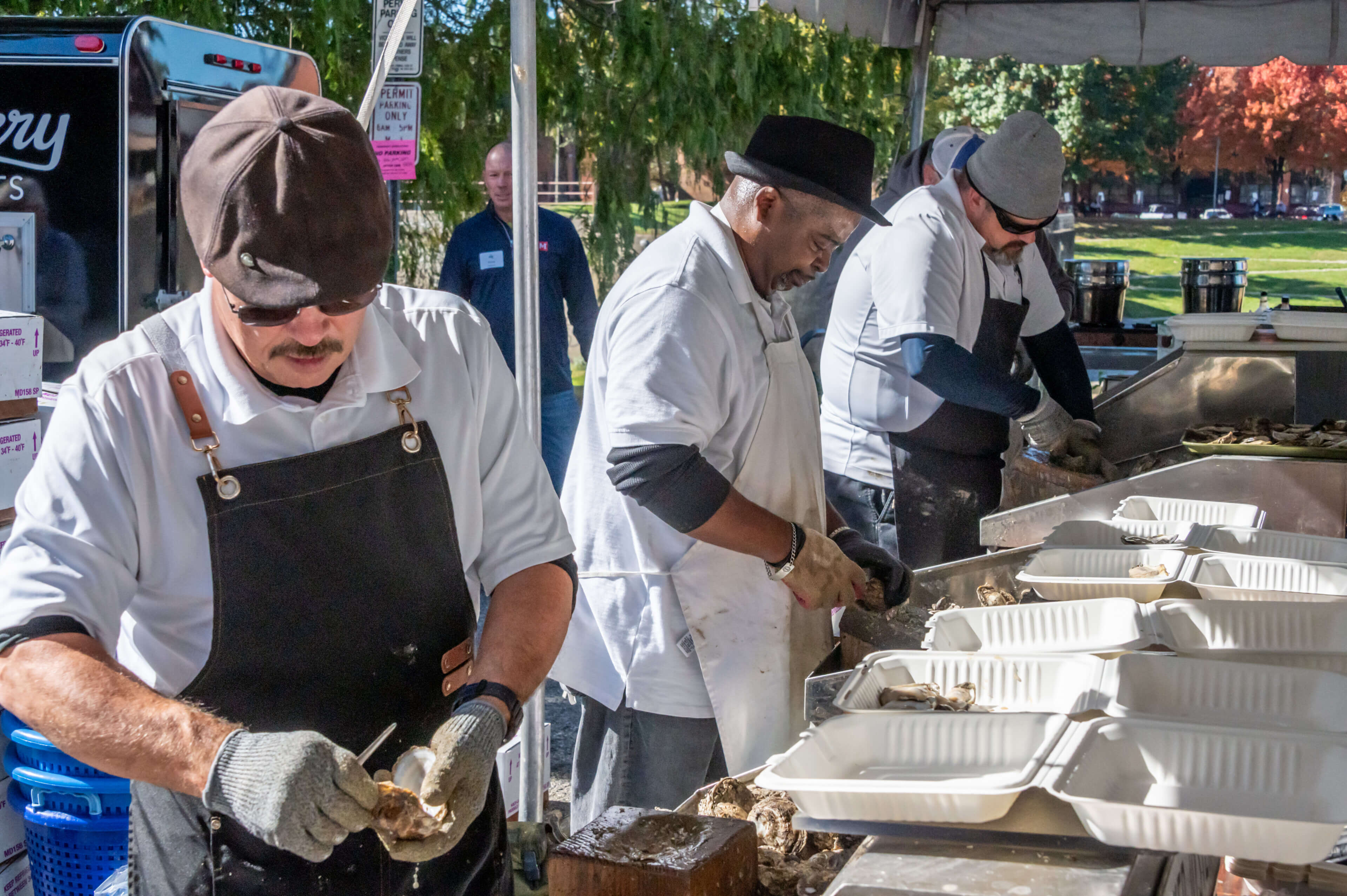
 James Thiess has shucked oysters from Virginia to Cape Cod, and he’s not about to let a single shell go to waste. The owner of Thiess Shucking Service, based in Loganville, will once again provide the raw bar at the 52nd Annual Fall Oyster Festival. And he’ll leave with baskets full of shells bound for the Chesapeake Bay.
“There’s no way if you’re hiring me that I don’t give a hoot about those shells,” Thiess said.
Here’s why it matters: Farm-raised oysters don’t reproduce. Wild oysters do, but only if their larvae have something to grab onto — a hard surface, ideally an old oyster shell.
That’s where the Chesapeake Bay Foundation comes in. Thiess partners with the foundation, which supplies collection baskets and signage for the festival. The shells he gathers, sometimes 12,000 at a time, go to a hatchery, cured outdoors for a year, then cleaned and seeded with young larvae that grow into new oysters or help rebuild bay-floor reefs. Each recycled shell becomes home to an average of 10 new baby oysters, according to the foundation’s website.
The Oyster Recovery Partnership runs a parallel effort, the Shell Recycling Alliance. Since 1994, it’s helped plant more than14 billion oysters across 3,000 acres of reef, recycling roughly 366,000 bushels of shell, according to its website.
The payoff extends beyond reproduction. The oysters help keep the water clean. A single oyster filters 50 gallons of water a day.
There’s currently no shell-collection program for York County restaurants, which makes the Oyster Festival’s partnership with CBF all the more valuable, turning a day of shucking into a real boost for the bay.
“It’s the right thing do to for the health of the Chesapeake Bay and for the health of the oysters,” Thiess said. “So I do my part, and I make sure I let people know why it’s so important.”