Tracing a Black family’s roots in York’s oyster trade
August 28, 2026
Alpacas and an expanded Kids Corral. A large vendor marketplace. Live music. Maryland crab soup, pulled pork, oysters and cold beer. It’s all at the York County History Center’s Fall Oyster Festival, presented by White Rose Bar & Grill, Sunday, Oct. 18, from 11 a.m. to 4 p.m. at the Colonial Complex in downtown York.
Learn more
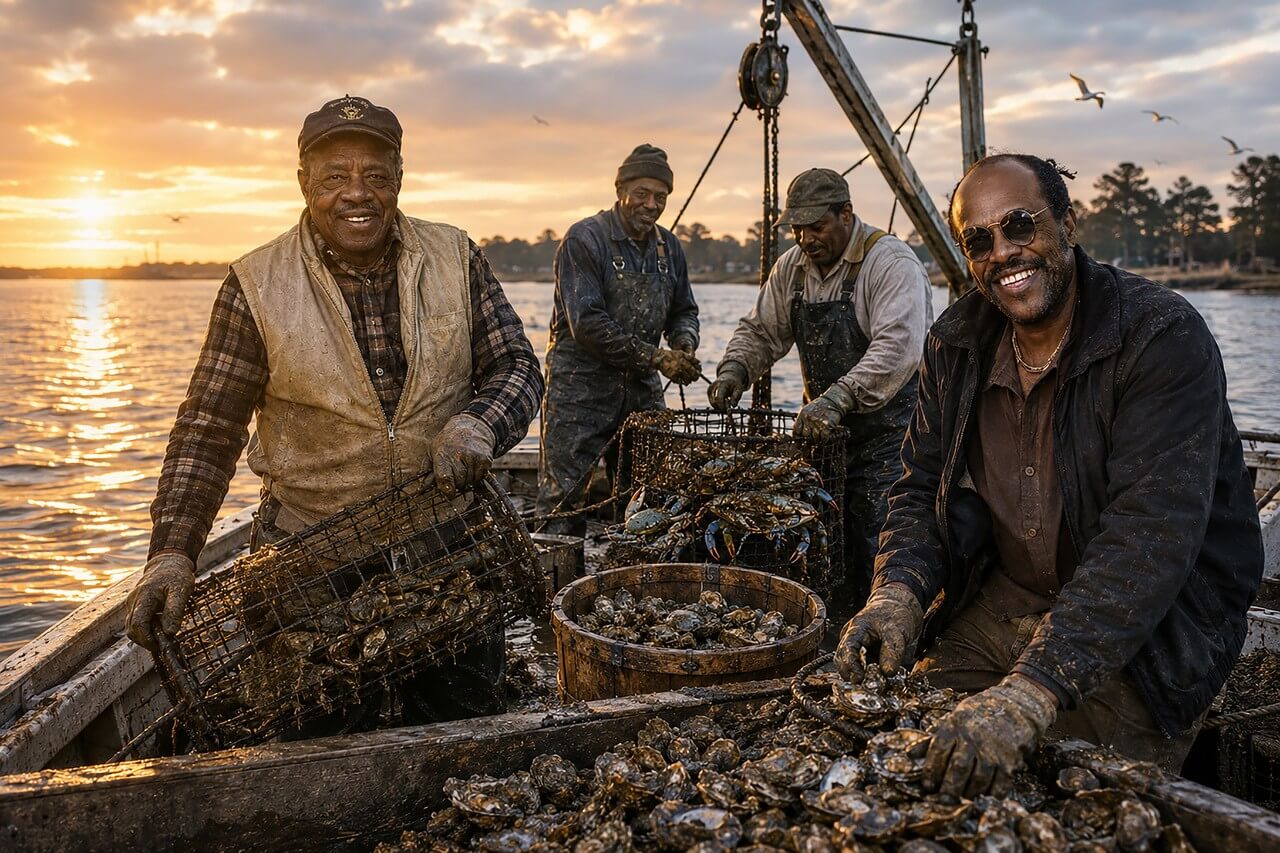
The two men in the front are, from left, Benjamin and Richard Waters, relatives of Neicy DeShields-Moulton who worked in Maryland’s oyster trade.
By Neicy DeShields-Moulton
 For me, the story of Black watermen and waterwomen is more than history. It is family.
My third-great-grandfather, Jerry DaShiell, and his son Zorah DeShields were part of a family whose lives were connected to the waters edge of Maryland’s Eastern Shore. Jerry, Zorah and their wives owned oyster lots, and today I hold copies of the deeds documenting that part of their lives.
And the women were right there beside the men. They shucked oysters, prepared crab meat and performed the demanding work that helped turn what came from the Chesapeake into food for the table and income for their families. Their contributions were just as important to this story, even when their names and labor were less likely to make it into the historical record.
My great-aunt Susan Nutter married Benjamin Waters, a Black waterman who spent his life harvesting oysters, crabs and fish from Eastern Shore waters. Benjamin and Richard Waters were among the watermen whose lives and work were documented in “Faces of the Eastern Shore” by photographer Frank Van Riper (you can purchase the book online here). Their story represents something much larger: generations of Black families who worked the Chesapeake, sold its bounty and built lives and communities around the water.
But the story of the Chesapeake’s oysters did not remain on Maryland’s shores. It traveled north to York.
As the oyster trade between Maryland and Pennsylvania grew, Black Marylanders also made their way to York and became part of the city’s oyster history. This fascinating local story is explored in “On a Bed of Oyster Shells I Stand,” published by Friends of Lebanon Cemetery and (available for purchase on Amazon and in the History Center’s gift shop). Their research introduces us to people such as brothers Thomas and Hamilton Gray, who operated oyster cellars and food establishments in York; and John Reeves, who came to York from Charles County, Md., and built a successful business selling oysters and seafood. You can read a social media post about the book here.
When I place their history beside my own family’s story, I see a connection stretching from the Chesapeake Bay to York: Black men and women worked the water, prepared its harvest, built businesses from its bounty and helped carry the Chesapeake’s seafood traditions from the water to the table.
The next time you enjoy an oyster — or pick a Maryland crab — take a moment to think about the hands behind it.
If you’d like to hear more, join me at the York County History Center’s 52nd Annual Fall Oyster Festival on Oct. 18, where I’ll share more about this history and the Black watermen and women within my own family. My talk starts at 1:30 p.m. inside the History Center Museum.
Come enjoy the oysters. But come hear their stories, too.
Because before the oyster reached the table, someone worked the water.
NOTE: Watch a short promotional video for the documentary, “Water’s Edge: Black Watermen of the Chesapeake,” originally broadcast on Maryland Public Television. The film adds context to the stories that Neicy will tell.
Neicy DeShields-Moulton is a genealogist who has specialized in researching the stories of her family and other Black families. She also serves on the History Center’s board of directors and on the Oyster Festival planning committee.
Image credit: Neicy DeShields-Moulton, enhanced with AI; “Faces of the Eastern Shore,” by Frank Van Riper.